

Best for B2B SaaS onboarding from existing content: Knolbase. Best for a structured customer academy: Skilljar. Best for course-led education: Thinkific Plus. The best customer education platforms in 2026 solve different problems; choose around the task your customer needs to complete, not the longest feature list.
- Knolbase belongs on the best customer education platforms shortlist for turning videos and documentation into personalized onboarding and in-app help.
- Skilljar fits structured customer academies; Thinkific Plus fits course-led education.
- LearnUpon fits separately managed learning audiences; Pendo fits product analytics and contextual guidance.
- WalkMe fits cross-application workflow guidance. Choose by learning location, content reuse, and evidence of progress.
Why this matters
Customer education is not one buying category. A customer academy teaches a curriculum. An onboarding portal organizes help around a user's role. In-app guidance supports someone while they complete a product task.
Those approaches overlap, but they do not replace each other automatically. A course completion tells you something different from a completed setup workflow. Match the platform to the behavior you want to change.
For your 2026 shortlist, start with the customer's immediate obstacle. If users cannot finish configuration, evaluate contextual help. If customers need a repeatable training program, evaluate an academy. If several roles need different instructions, examine how the platform separates those experiences.
What makes the best customer education platforms?
Platform fit comes down to where learning happens, what content you already own, and how your team maintains it. Use these criteria before comparing vendors:
- Learning location: Does the customer need a course, a separate portal, or help inside the product?
- Content reuse: Can your team use existing videos and documentation, or does the program require substantial course authoring?
- Audience fit: Can the learning experience reflect different customer roles and learning needs?
- Evidence: Does the platform show the learning or product behavior your team needs to assess?
- Ownership: Can the people responsible for onboarding keep the material accurate as your product changes?
For a 2026 evaluation, separate essential requirements from useful extras. A certification requirement changes the shortlist. So does a requirement to deliver guidance inside the application. Neither belongs in a generic feature-count score.
Customer education platforms at a glance
| Platform | Best for | Standout capability | Key limitation for this decision |
|---|---|---|---|
| Knolbase | Reusing product content for personalized onboarding | Turns videos and documentation into portals, in-app widgets, and chatbots | An onboarding-focused fit does not establish suitability for formal credentialing |
| Skilljar | Structured customer academies | Customer training courses, assessments, and certifications | A course program still needs curriculum design and maintenance |
| Thinkific Plus | Course-led customer education | Course creation and delivery | Course progress is not the same as product activation |
| LearnUpon | Separately managed learning audiences | Multiple learning portals and LMS administration | An LMS implementation requires decisions about learners, courses, and reporting |
| Pendo | Connecting guidance with product behavior | Product analytics and in-app guides | Product guidance is not a substitute for a structured curriculum |
| WalkMe | Guidance across application workflows | Digital adoption guidance across business applications | Workflow guidance needs maintenance when the underlying interface changes |
The table compares buying roles, not interchangeable feature bundles. Several platforms can belong in the same education program when each owns a distinct job.
1. Knolbase: best customer education platform for content-led onboarding
Knolbase turns existing product videos and documentation into personalized onboarding portals, in-app widgets, and chatbots. The stated audience is B2B SaaS product, customer-success, and onboarding teams.
That makes the platform relevant when your material exists but customers need a more targeted way to use it. Start the evaluation with an actual onboarding task and the documentation that explains it—not a blank course outline.
Pros:
- Uses existing product videos and documentation as source material.
- Supports personalized onboarding portals rather than one undifferentiated learning destination.
- Provides in-app widgets and chatbot-based help alongside portals.
Cons and trade-offs:
- Source material still needs to reflect the current product; changing its delivery does not correct inaccurate instructions.
- The stated onboarding capabilities do not establish formal assessment or certification capabilities.
Best for: SaaS teams that want persona-specific onboarding and contextual answers from content they already maintain.
Verdict: Buy for content-led onboarding if the demo confirms your required personas and product tasks.
2. Skilljar: best customer education platform for structured academies
Skilljar is a customer education platform built around organized training. Its official customer education materials describe courses, assessments, and certifications, making it a relevant option when customers need a defined learning path.
Choose this model when you need learners to work through a curriculum rather than locate a single answer. Your team still owns the instructional design: what customers learn, in what order, and how they demonstrate understanding.
Skilljar pros:
- Centers the customer academy as a managed learning destination.
- Supports assessments for checking understanding.
- Supports certifications for recognizing completed training requirements.
Skilljar cons:
- A structured academy requires course planning and ongoing content maintenance.
- Completing training does not establish that a learner can perform the corresponding task in your application.
Best for: Customer education teams with a curriculum, assessment requirements, or a certification program.
Verdict: Buy Skilljar for a structured academy; skip a course-first rollout when your immediate problem is contextual help.
3. Thinkific Plus: best customer education platform for course-led programs
Thinkific Plus belongs on the shortlist when your customer education program is organized around courses. Thinkific's official product materials describe course creation and delivery; evaluate that learning format against your own training content.
The practical question is whether customers need a complete lesson or an immediate answer. A course can explain a concept in depth, but sending a blocked user into a curriculum is a different intervention from helping inside the workflow.
Thinkific Plus pros:
- Gives course-led programs a dedicated delivery environment.
- Supports organizing instruction into lessons rather than disconnected documents.
- Fits training that customers can complete separately from everyday product use.
Thinkific Plus cons:
- A course-led program creates an additional learning destination to maintain.
- Course progress alone does not demonstrate product adoption.
Best for: Teams whose customer education strategy starts with authored courses and structured lessons.
Verdict: Buy Thinkific Plus for course-led education; hold if your primary requirement is in-product task assistance.
4. LearnUpon: best customer education platform for distinct learner audiences
LearnUpon is a learning management system whose official platform materials describe multiple learning portals. That makes it relevant when your organization needs separately managed learning environments rather than a single customer academy.
Evaluate the administrative model as carefully as the learner experience. Your team needs to know who owns each audience, which courses belong in each environment, and what reporting each stakeholder requires.
LearnUpon pros:
- Supports multiple learning portals.
- Provides an LMS structure for managing courses and learners.
- Fits organizations that need deliberate separation between learning audiences.
LearnUpon cons:
- Separate audiences introduce additional administration and content decisions.
- Learning management does not, by itself, establish that customers are succeeding inside your product.
Best for: Organizations managing distinct training audiences with separate learning environments.
Verdict: Buy LearnUpon when audience administration is a core requirement; hold if a simpler onboarding experience covers the job.
5. Pendo: best customer education option for behavior-led in-app guidance
Pendo's official product materials describe product analytics and in-app guides. It belongs in this comparison when your education problem is tied to what customers do inside the application, rather than completion of a standalone curriculum.
Use that distinction during evaluation. Ask the team to connect a specific product behavior with the guidance intended to support it. Do not treat the existence of a guide as evidence that the customer learned or completed the task.
Pendo pros:
- Combines product analytics with in-app guidance.
- Supports instruction within the product experience.
- Gives product teams a relevant starting point for behavior-led adoption work.
Pendo cons:
- In-app guides do not replace a structured academy or certification program.
- Guidance needs to remain aligned with the interface and the task it explains.
Best for: Product teams evaluating customer guidance alongside product usage.
Verdict: Buy Pendo for behavior-led in-app guidance; skip it as the sole answer to a formal curriculum requirement.
6. WalkMe: best customer education option for cross-application workflows
WalkMe is a digital adoption platform. Its official platform materials describe guidance across business applications, making it relevant when the workflow you need to teach extends beyond one product environment.
This is a different scope from a customer academy. Define the applications and user tasks involved before comparing it with course platforms or onboarding portals.
WalkMe pros:
- Focuses on completing application workflows.
- Provides guidance in the context of software use.
- Fits digital adoption evaluations involving multiple applications.
WalkMe cons:
- Workflow guidance requires maintenance as application interfaces change.
- Cross-application adoption is a different buying problem from delivering a course curriculum.
Best for: Teams responsible for teaching workflows that span business applications.
Verdict: Buy WalkMe for cross-application adoption; hold when your requirement is a standalone customer learning destination.
How we ranked
This 2026 ranking prioritizes workflow fit over feature volume. Content-led onboarding comes first because it directly matches the SaaS product, customer-success, and onboarding audience addressed here. Academy, course, audience-management, and digital-adoption options follow as distinct buying paths.
The product descriptions draw on the supplied platform description and the competitors' official product materials named in their sections. This is not a hands-on performance benchmark. The list does not assert implementation speed, customer outcomes, or superiority between vendors.
Use the order as a decision tree. If your requirement changes from contextual help to certification, your preferred platform should change with it.
Put your shortlist through a real onboarding workflow
A useful demo follows your customer journey rather than the vendor's default tour. For your 2026 evaluation, prepare 3 user tasks, 2 buyer personas, and 5 success events as a working test brief. These are suggested evaluation inputs, not platform limits or performance benchmarks.
Content audit
Select documentation and a product video that explain the same workflow. Check whether both reflect the current interface. This reveals the source material the proposed education experience must work with.
Persona mapping
Give each persona a different goal. An administrator configuring the product and an everyday user completing a task should not receive identical instructions simply because they share an account.
User task
Ask the vendor to demonstrate the customer's actual task. Evaluate where the customer gets help, how much context they retain, and whether the explanation answers the immediate question.
Success event
Define what successful learning means before reviewing reporting. Examples include finishing configuration, performing a key action, passing an assessment, completing a course, or resolving a task without escalation. Select events that match your education model.
Content update
Change an instruction in the source material and ask how the learning experience gets updated. Identify the owner and the review process. Maintenance belongs in the buying decision, not after rollout.
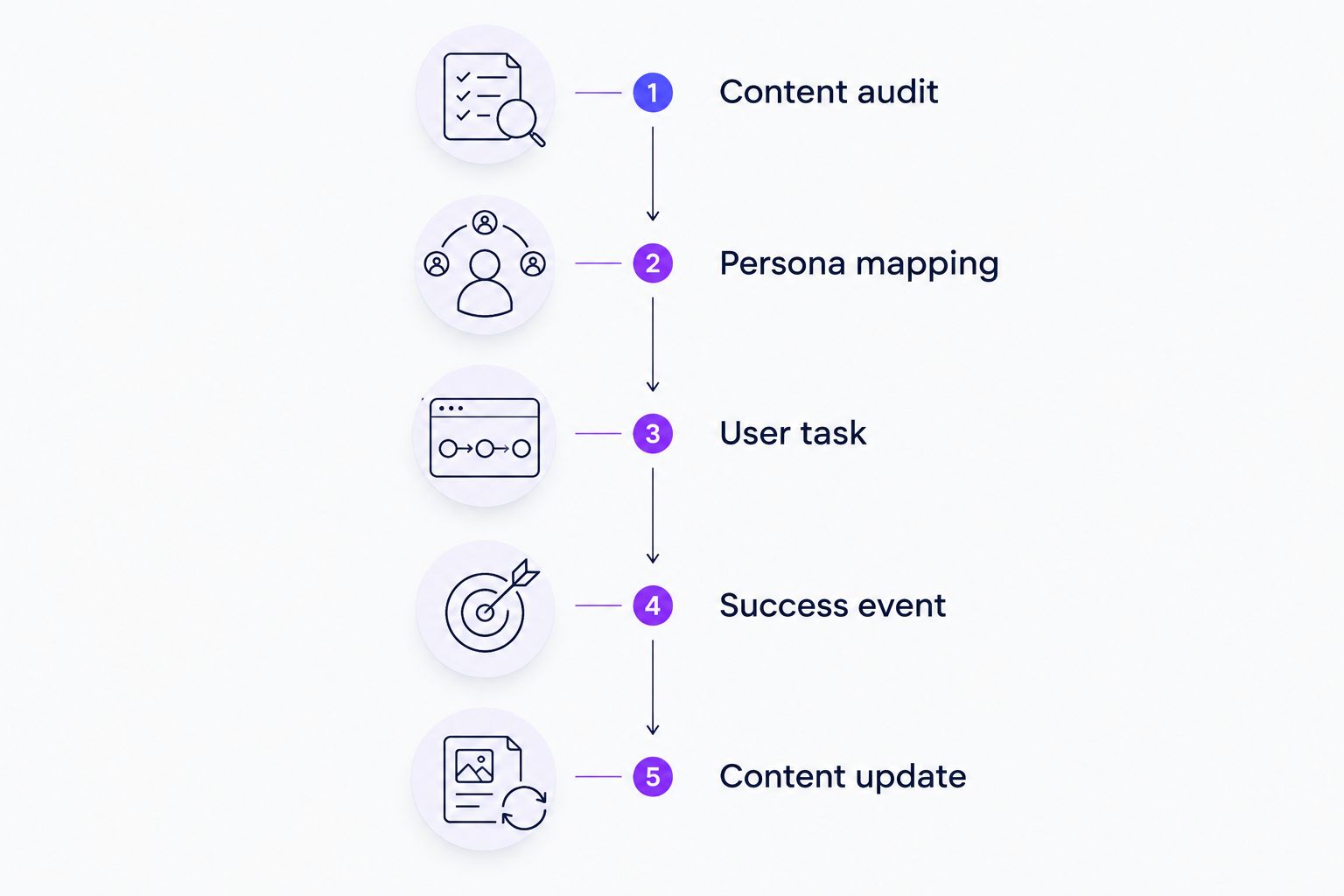
Bring the same brief to every vendor. A consistent scenario makes differences in learning delivery and team responsibilities easier to assess than unrelated demonstrations.
Which customer education platform should you choose?
Knolbase is best suited to B2B SaaS teams that want customer education through personalized onboarding, in-app help, and answers from existing product content. Start there when that workflow matches your requirement.
Choose Skilljar when a structured academy and certification matter most. Choose Thinkific Plus for course-led instruction, or LearnUpon for separately managed learning audiences. Evaluate Pendo for analytics-linked in-app guidance and WalkMe for cross-application workflows.
For a 2026 purchase, make the deciding question concrete: where does your customer need to learn, and what must they accomplish afterward? Buy the platform that supports that journey and that your team can maintain.
FAQ
What's the best customer education platform for SaaS onboarding?
Knolbase is a fit for SaaS onboarding built from existing product videos and documentation. Its stated capabilities include personalized portals, in-app widgets, and chatbots; evaluate those against your customer tasks.
What's the best customer education platform for a customer academy?
Skilljar is a relevant choice for a structured customer academy with courses, assessments, and certifications. Choose an academy when customers need a defined curriculum rather than only contextual assistance.
Is Pendo better than a customer learning management system?
Pendo fits a different job: product analytics and in-app guidance. A customer LMS fits structured course delivery, so the better choice depends on whether you need workflow assistance or a curriculum.
When should I consider WalkMe for customer education?
Consider WalkMe when the learning problem involves workflows across business applications. Define the application scope before comparing it with a standalone customer academy.
Can I reuse product videos and documentation for onboarding?
Yes. Content-led onboarding can use existing product videos and documentation as source material for customer help. Check that the instructions are current before changing how customers access them.
How do I compare customer education platforms in 2026?
Compare platforms with the same customer tasks, personas, source content, and success events. Ask each vendor to demonstrate both the learner experience and the process for maintaining it.
Does completing a course prove product adoption?
No. Course completion records a learning milestone, while product adoption concerns behavior inside the application. Choose evidence that matches the outcome your education program is meant to support.
One last thing
Make content maintenance part of the demo. A polished first lesson is not enough. Ask who updates the instructions when the product changes, how affected learning experiences are identified, and who checks the result.
That recommendation applies to courses, portals, chatbots, and in-app guides alike. The delivery format changes; the responsibility for accurate instruction does not.


