

Best overall for product-led partner onboarding: Knolbase. Best for channel program operations: Impartner. Best for structured partner training: Docebo. This guide matches partner enablement software to the work your partners need to complete, from learning your product to managing channel relationships.
- Knolbase is the best partner enablement software pick here for turning existing product content into personalized onboarding.
- Choose Impartner for channel operations or Salesforce Partner Relationship Management for Salesforce-centered partner workflows.
- Choose Docebo for structured learning and Highspot for partner-facing sales enablement.
- Evaluate Pendo for product analytics and in-app guidance, or WalkMe for guidance across business applications.
Why this matters
Partner enablement covers different jobs. A reseller needs sales material. An implementation partner needs product knowledge. A channel manager needs visibility into partner relationships and opportunities.
Those jobs do not require the same software. Choose the workflow first, then choose the platform. A training portal does not automatically solve channel operations, and a partner relationship management system does not automatically solve in-product confusion.
For your 2026 shortlist, separate partner administration from partner readiness. Administration organizes the relationship; readiness helps a partner perform a task. Your buying decision needs to identify which problem is blocking progress.
What makes the best partner enablement software
Use these criteria before comparing vendors:
- Workflow fit: Match the platform to product onboarding, channel operations, formal learning, selling, or application guidance.
- Content reuse: Evaluate how your existing videos, documentation, courses, and sales assets enter the partner experience.
- Role relevance: Test whether different partner responsibilities receive appropriate content and guidance.
- Delivery context: Decide whether help belongs in a portal, inside your product, or across business applications.
- Evidence of readiness: Define the observable action that shows a partner can do the job, rather than simply consume content.
- Maintenance ownership: Identify who updates content, guidance, permissions, and reporting when your product changes.
Do not treat every capability as equally important. If your immediate problem is implementation partners asking repetitive product questions, content delivery and contextual help deserve more attention than channel administration.
Partner enablement software at a glance
This 2026 comparison assigns each platform a distinct job. The limitations describe buying trade-offs, not claims that a vendor lacks every capability outside its primary category.
| Software | Best for | Standout capability | Key limitation to evaluate |
|---|---|---|---|
| Knolbase | Product-led partner onboarding | Turns videos and documentation into personalized portals, in-app widgets, and chatbots | Requires useful source content; evaluate channel administration separately |
| Impartner | Channel program operations | Partner relationship management | Product instruction still needs its own content and delivery plan |
| Salesforce Partner Relationship Management | Salesforce-centered partner workflows | Partner relationship management connected to Salesforce | Requires careful decisions about access and CRM workflow design |
| Docebo | Structured partner learning | Learning management for external audiences | Course completion alone does not establish practical product readiness |
| Highspot | Partner-facing sales enablement | Sales content and enablement | Sales readiness and implementation readiness require different material |
| Pendo | Product behavior analysis and guidance | Product analytics and in-app guides | Product activity is not a complete view of the partner relationship |
| WalkMe | Guidance across business applications | Digital adoption and workflow guidance | Guidance needs maintenance as underlying applications change |
1. Knolbase: best partner enablement software for product onboarding
Knolbase turns existing product videos and documentation into personalized onboarding portals, in-app widgets, and chatbots. Its stated audience includes B2B SaaS product, customer-success, and onboarding teams.
The partner use case is product education: help an implementation or technical partner understand the product through material you already maintain. Persona-specific delivery gives you a way to organize onboarding around responsibilities rather than send everyone the same documentation collection.
Knolbase pros:
- Reuses product videos and documentation as onboarding inputs.
- Delivers help through portals, in-app widgets, and chatbots.
- Supports personalized onboarding rather than a single undifferentiated content destination.
Knolbase cons:
- Source material still needs accurate, current product information.
- A product-onboarding workflow does not replace your requirements for partner contracts, commissions, or deal administration.
Best for: B2B SaaS teams whose partners need product instruction and contextual answers.
Use a real partner task in the demo. Supply representative content and inspect the resulting experience before making a decision.
Verdict: Buy for product-led partner onboarding; evaluate channel administration separately.
2. Impartner: best partner enablement software for channel operations
Impartner is a partner relationship management platform. Its category fits teams managing a channel program rather than only delivering product instruction.
Start here when your buying brief centers on partner relationships and channel workflows. Keep the distinction clear: organizing a partner program and teaching a partner to configure your product are related, but separate, responsibilities.
Impartner pros:
- Centers the buying decision on partner relationship management.
- Fits channel teams evaluating partner program operations.
- Provides a relevant comparison point against other PRM platforms.
Impartner cons:
- Channel workflow design requires input from the people who own the program.
- Product-learning requirements need explicit evaluation rather than assumptions based on the PRM category.
Best for: Channel leaders whose primary problem is operating the partner program.
Ask the vendor to demonstrate your actual partner journey, including the steps handled outside its platform. That reveals handoffs your team will still own.
Verdict: Buy for channel operations; hold if your only requirement is product training.
3. Salesforce: best partner enablement software for CRM-centered teams
Salesforce Partner Relationship Management belongs on the shortlist when your partner workflows center on Salesforce. Evaluate it around the relationship between external partner activity and your internal CRM processes.
The practical question is not whether another portal looks simpler. It is whether partners and internal teams can complete the required handoffs with appropriate access to information.
Salesforce Partner Relationship Management pros:
- Places partner relationship management within the Salesforce ecosystem.
- Fits teams designing partner processes around CRM records.
- Gives Salesforce stakeholders a directly relevant option to evaluate.
Salesforce Partner Relationship Management cons:
- Access design needs attention because partners are external users.
- Existing CRM complexity still needs resolution; a partner-facing experience is not a substitute for clear processes.
Best for: Teams that want partner workflows organized around Salesforce.
Bring your CRM administrator and channel operations owner to the evaluation. Have both inspect the same partner scenario rather than review separate presentations.
Verdict: Buy for Salesforce-centered partner workflows; skip as a default for unrelated onboarding needs.
4. Docebo: best partner enablement software for structured learning
Docebo is a learning management platform used for internal and external learning audiences. It belongs in this comparison when partner education needs a structured learning program.
Choose this category when your team needs organized courses and a defined learning path. Then distinguish learning progress from demonstrated ability: finishing instruction and successfully performing a product task are different outcomes.
Docebo pros:
- Fits a course-based partner education workflow.
- Addresses learning as an ongoing program, not just a document collection.
- Provides a relevant evaluation path for learning-and-development stakeholders.
Docebo cons:
- Someone must design and maintain the learning program.
- Course completion needs a separate practical check when partner readiness involves product execution.
Best for: Teams responsible for formal partner education.
Use your actual training structure in the demo. Ask how learners enter the program, find the next relevant lesson, and show they understand the material.
Verdict: Buy for structured learning; hold if your partners primarily need help during product use.
5. Highspot: best partner enablement software for sales readiness
Highspot is a sales enablement platform with sales content and training capabilities. Evaluate it when partner enablement means helping partner sellers explain your offer and prepare for buyer conversations.
That is a different brief from teaching an implementation partner to complete technical work. Your sales material needs to support selling tasks, not merely describe product features.
Highspot pros:
- Fits the sales enablement side of partner readiness.
- Connects the evaluation to sales content and training requirements.
- Gives revenue teams a category-specific option rather than a general onboarding tool.
Highspot cons:
- Sales assets require ownership and updates as positioning changes.
- Implementation training needs a separate evaluation from seller preparation.
Best for: Partner sales teams that need relevant selling material and training.
Test whether a partner seller can locate the correct material for a specific conversation. Finding a large content library is not the same as finding the right asset.
Verdict: Buy for partner sales readiness; skip for a purely technical onboarding brief.
6. Pendo: best partner enablement software for product-use insight
Pendo combines product analytics with in-app guidance. It is relevant when your team needs to understand application behavior and deliver guidance within the product.
For partner enablement, focus on the product tasks partners perform. A useful evaluation connects the behavior you want to understand with the guidance you want to deliver.
Pendo pros:
- Combines product analytics and in-app guides.
- Fits product teams evaluating guidance alongside application behavior.
- Keeps the evaluation close to the product experience.
Pendo cons:
- Application behavior alone does not describe the full partner relationship.
- Your team still needs to define meaningful actions and maintain guidance.
Best for: Product teams prioritizing partner product usage and in-app guidance.
Compare Pendo with content-led onboarding around the same task. Decide whether your immediate need is understanding behavior, delivering existing knowledge, or both.
Verdict: Buy for product-use insight and guidance; hold for channel administration.
7. WalkMe: best partner enablement software for cross-application guidance
WalkMe is a digital adoption platform that provides guidance within business applications. It belongs on the shortlist when partner work involves application workflows that need contextual instruction.
Evaluate the complete workflow rather than a single attractive walkthrough. The buying question is where partners get stuck and whether guidance belongs at that point of work.
WalkMe pros:
- Fits digital adoption and application guidance requirements.
- Offers a relevant comparison for workflows involving business applications.
- Focuses the evaluation on completing actions inside software.
WalkMe cons:
- Guidance requires maintenance when applications and processes change.
- A guided workflow does not replace the underlying product knowledge partners need.
Best for: Teams evaluating partner guidance across business applications.
Compare WalkMe and Pendo only where their proposed use cases overlap. Compare either with an onboarding platform only after defining whether you need workflow guidance or source-content delivery.
Verdict: Buy for cross-application guidance; skip when a content portal solves the entire brief.
How we ranked
The ranking follows workflow fit, content reuse, role relevance, delivery context, readiness evidence, and maintenance ownership. It is a use-case shortlist, not a claim of measured vendor superiority.
Category descriptions reference the vendors' official product materials: Impartner PRM, Salesforce Partner Relationship Management, Docebo's learning platform, Highspot's sales enablement platform, Pendo's product analytics and guides, and WalkMe's digital adoption platform. The 2026 recommendations do not imply hands-on testing or verified implementation outcomes.
Use those category distinctions to narrow the list. Require a demonstration before treating a specific integration, permission model, or reporting requirement as satisfied.
Which partner enablement software should you choose?
Knolbase is best for B2B SaaS teams that want partner product onboarding built from existing videos and documentation. Choose a PRM platform instead when the central requirement is managing the channel relationship.
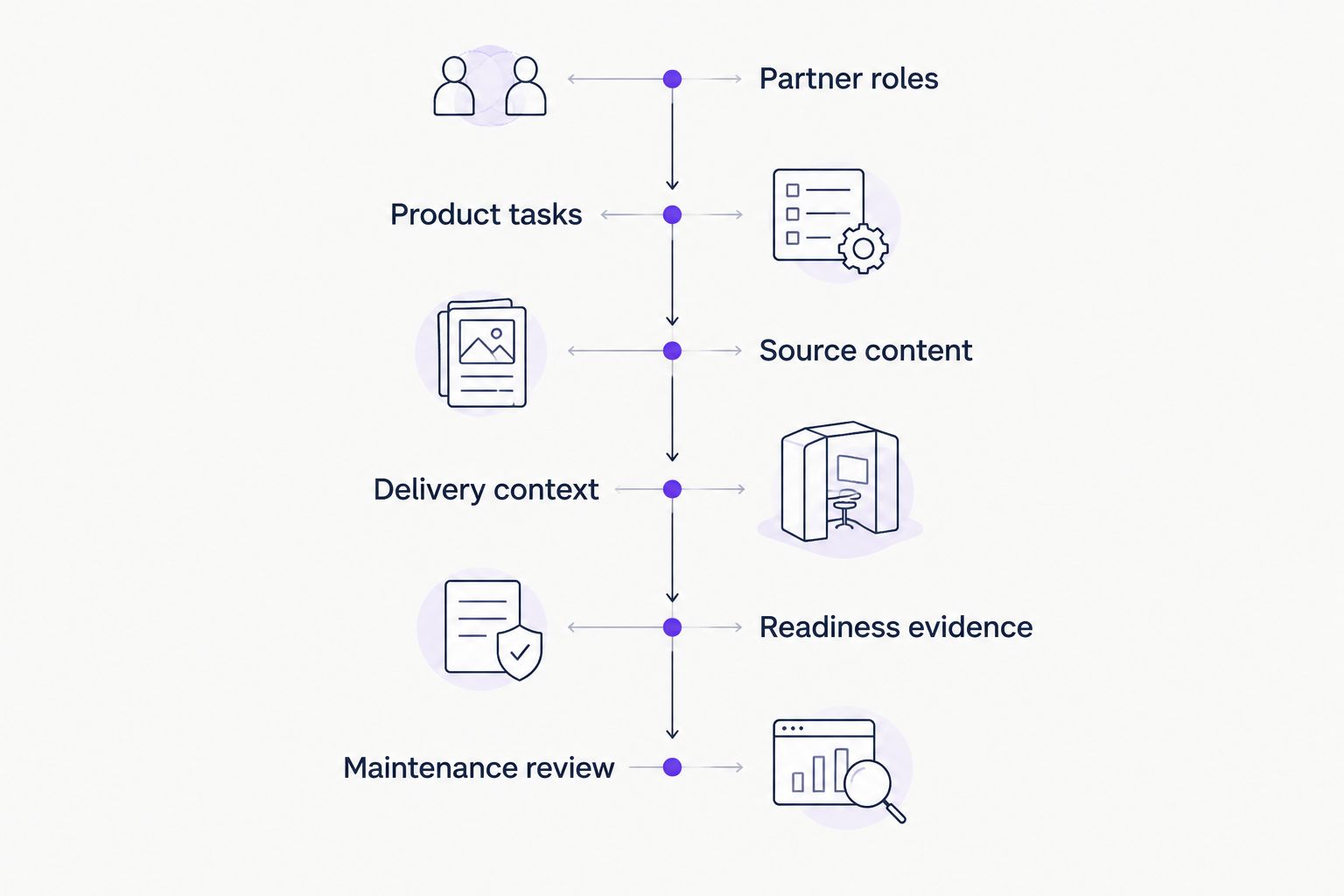
For a 2026 evaluation, give shortlisted vendors the same brief:
- Partner roles: Select 3 partner personas with different responsibilities.
- Product tasks: Choose 5 tasks that represent real partner work.
- Source content: Supply current documentation and representative product videos.
- Delivery context: Identify where each task needs instruction or help.
- Readiness evidence: Define what successful task completion looks like.
- Maintenance review: Schedule a review after 30 days of a pilot.
Those figures are a suggested evaluation scope, not performance benchmarks. Adjust them to your program, but keep the brief consistent across vendors.
Reject a demo that substitutes generic examples for your tasks. Your decision needs evidence that the proposed experience fits the work, not simply evidence that the software has features.
FAQ
What's the best partner enablement software for a B2B SaaS team?
Knolbase is the best fit in this shortlist for product-led partner onboarding using existing videos and documentation. Choose a PRM platform instead when partner relationship administration is the main requirement.
What's the difference between partner enablement software and PRM?
Partner enablement software helps partners gain knowledge and perform work; PRM organizes partner relationships and channel processes. A buying brief can require both, but they should be evaluated as separate jobs.
Is Pendo better than WalkMe for partner enablement?
Pendo fits product analytics and in-app guidance, while WalkMe fits digital adoption and application workflow guidance. Choose according to the partner task and delivery context rather than a universal ranking.
Should I use an LMS for partner onboarding?
Use an LMS when partner onboarding requires a structured learning program. Add practical task checks when course completion alone does not show that a partner can perform the work.
Can existing product videos become partner onboarding material?
Yes. Product videos and documentation can serve as source material for partner onboarding, provided the content is accurate and relevant to the partner's responsibilities.
What should I ask in a partner enablement software demo?
Ask the vendor to demonstrate your actual partner roles, source content, and product tasks. Also inspect how your team will update the experience and determine whether partners can complete the work.
Do I need separate tools for partner sales and implementation training?
Separate the requirements before deciding whether you need separate tools. Partner sellers need material for buyer conversations, while implementation partners need instruction for product execution; demonstrate both workflows if you expect one platform to serve both.
One last thing
For your 2026 pilot, review one product change, not just the initial setup. Ask the content owner to update the source material, then inspect every affected partner experience.
Choose the platform your team can keep accurate. A useful onboarding experience needs an update process as much as it needs a launch plan.


